Gender Equality Progress and Challenges in Cambodia
Cambodia, a Southeast Asian nation with a population of over 16 million, has made significant strides toward gender equality over the past few decades. However, despite this progress, gender-based disparities continue to persist in various spheres, including education, health, political representation, and economic participation. In recent years, the Cambodian government and civil society have increasingly prioritized gender equality as a crucial component of the country's sustainable development. Yet, many challenges remain, particularly rooted in cultural norms, economic structures, and access to opportunities . This article explores the progress made in gender equality in Cambodia, as well as the obstacles that continue to impede true gender parity.
Historical Context and Legal Framework
Cambodia's Cultural and Historical Background
Cambodia's deep-rooted cultural traditions have historically placed women in subordinate roles, particularly in rural areas. The influence of Buddhism, combined with patriarchal societal norms, has traditional women in caregiving and household roles, while men were often viewed as the breadwinners and decision - makers. During the Khmer Rouge regime (1975-1979), these traditional structures were upended, with women being forced into labor under extremely harsh conditions. The regime's fall left Cambodia economically devastated and socially fractured. As the country began its slow recovery in the 1980s, rebuilding included revisiting gender roles within the household, economy, and society at large.
The Legal Framework
Cambodia's legal framework has increasingly aligned with global gender equality standards over the past few decades. The country's constitution, adopted in 1993, guarantees gender equality. Article 45 of the Cambodian Constitution states: "All forms of discrimination against women shall be abolished, and the exploitation of women in labor shall be prohibited." Furthermore, Cambodia is a signatory to various international conventions that promote gender equality, such as the Convention on the Elimination of All Forms of Discrimination Against Women (CEDAW) .
Several national policies and strategies have been introduced to promote gender equality, such as the National Action Plan to Prevent Violence Against Women (2014-2018) and the Gender Mainstreaming Action Plan . The Ministry of Women's Affairs plays a crucial role in promoting gender equality across sectors, working in partnership with international organizations and NGOs. However, despite these frameworks, enforcement remains a significant issue.
Progress in Gender Equality
Educational Attainment
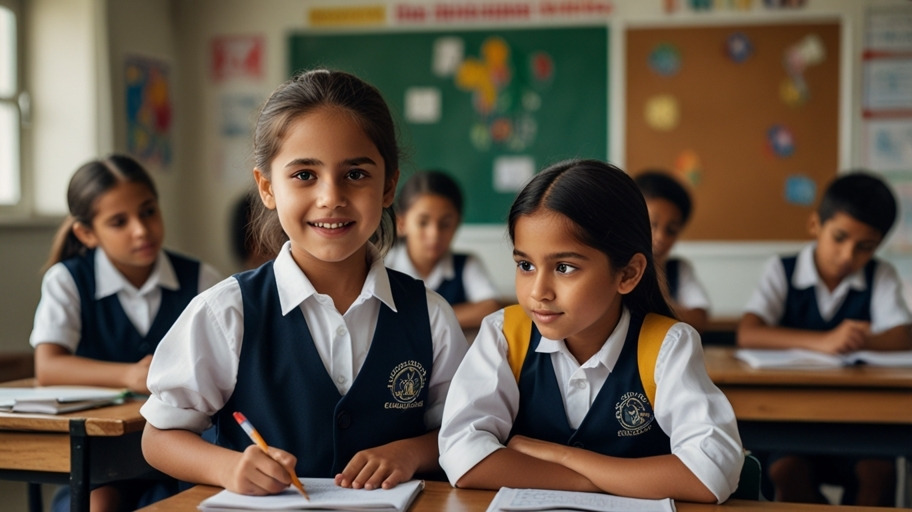
Education is a crucial arena in which Cambodia has made notable progress in terms of gender equality. In the past, access to education was limited for both boys and girls, but girls were particularly disadvantaged due to gender norms that prioritized domestic responsibilities over schooling. This has changed dramatically in the past few decades. According to UNICEF, gender parity in primary school enrollment has been achieved, with equal numbers of boys and girls attending school.
Moreover, secondary school enrollment for girls has significantly improved, although there remains a noticeable gap, especially in rural areas where economic hardship and cultural expectations continue to lead to higher dropout rates for girls. In particular, girls often leave school to help with household chores or to work, and early marriage is still a common practice that curtails girls' educational opportunities.
Despite progress in education, there remain challenges at the higher levels of education, particularly in terms of access to tertiary education. Women are still underrepresented in universities, particularly in fields such as science, technology, engineering, and mathematics (STEM). This educational gap contributes to the underrepresentation of women in skilled jobs and leadership positions in the workforce, which hampers broader gender equality.
Women's Health
Cambodia has made substantial progress in improving women's health, particularly in maternal health. Maternal mortality rates have significantly dropped in recent decades, falling from 472 per 100,000 live births in 2005 to 170 per 100,000 in 2014, according to the World Health Organization (WHO) . Increased access to healthcare facilities and skilled birth attendants has played a crucial role in this decline.
However, challenges remain in terms of reproductive health education and services, especially in rural areas. Access to contraception and family planning services is still limited, with cultural taboos surrounding discussions on reproductive health persisting in many communities. Young women and adolescent girls, in particular , face barriers to accessing sexual and reproductive health services, which can lead to early pregnancies, unsafe abortions, and poor maternal health outcomes.
Economic Participation
Women's economic participation in Cambodia has seen improvements over the years. Women constitute approximately 51% of the workforce, particularly in sectors such as agriculture, garment manufacturing, and small-scale trade. In the garment industry, which is one of Cambodia's largest economic sectors , women make up around 80% of the workforce. This sector has provided many women with employment opportunities that were previously unavailable.
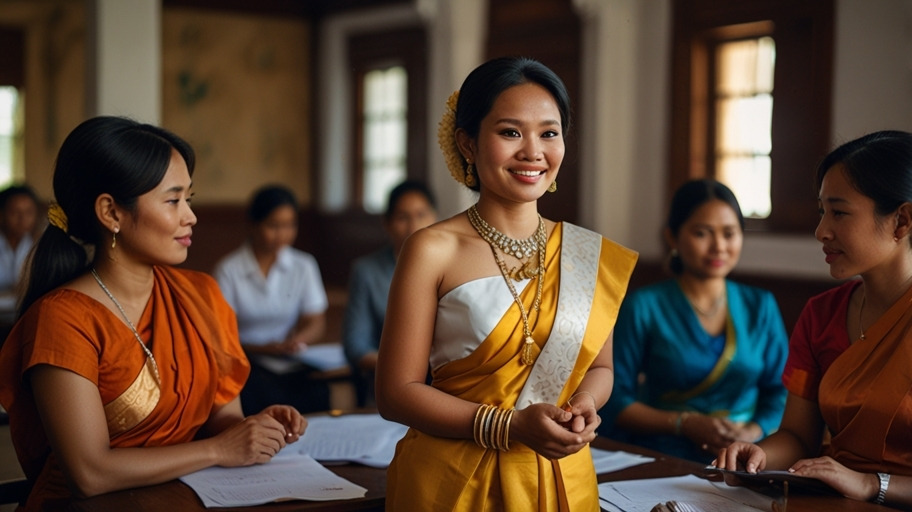
However, women are often concentrated in low-wage and informal jobs, with limited access to social protection, job security, and upward mobility. While women may be participating in the labor force, the gender wage gap remains significant. According to the Cambodian Ministry of Women's Affairs, women in Cambodia earn approximately 30% less than men on average, particularly in informal and unskilled sectors. Moreover, women often face barriers to entering higher-paid industries and leadership roles due to traditional gender roles and limited access to higher education .
Entrepreneurship among women has also been growing in Cambodia, supported by microfinance institutions and international development programs. Many women are involved in small-scale businesses, particularly in agriculture, retail, and hospitality. However, access to finance and business training remains a challenge for many women, especially in rural areas. Gender norms also limit women's ability to take on entrepreneurial risks or expand their businesses.
Political Participation and Leadership
Women in Politics
The political representation of women in Cambodia has seen incremental improvements. Women's representation in the National Assembly increased from 6% in 1993 to around 20% in the 2018 general elections. Although this is progress, Cambodia still falls short of international standards for women's representation in politics.
The Cambodian government has taken steps to promote women's political participation through policies such as the National Strategic Development Plan , which aims to increase women's leadership roles in government and public life. Additionally, the Cambodian National Council for Women was established to support women's empowerment and monitor the implementation of gender equality laws.
Despite these efforts, cultural and structural barriers continue to prevent women from achieving equal political representation. Traditional beliefs about gender roles often discourage women from pursuing political careers, while male-dominated political structures create additional barriers. Women who do enter politics often face gender- based discrimination and harassment, which further discourages participation. Furthermore, women are underrepresented in high-ranking positions within political parties and government bodies, limiting their influence in decision-making processes.
Leadership in Business
Women are also underrepresented in leadership positions within the private sector. While women are active in the workforce, only a small percentage occupy senior management roles or sit on corporate boards. The Cambodian Chamber of Commerce , for instance, has few women in prominent leadership positions The lack of female representation in leadership roles is a reflection of broader societal norms that discourage women from pursuing leadership or entrepreneurial careers. Furthermore, women face additional challenges in balancing work with household and caregiving responsibilities, which can limit their career progression.
Persistent Challenges to Gender Equality
Gender-Based Violence
One of the most significant challenges to gender equality in Cambodia is the prevalence of gender-based violence (GBV). According to a 2015 study by the Ministry of Women's Affairs and the World Health Organization, one in five Cambodian women has experienced physical or sexual violence at the hands of an intimate partner. Domestic violence, rape, and sexual harassment are pervasive issues, with many cases going unreported due to stigma, fear of retribution, and limited access to justice.
While Cambodia has laws in place to address gender-based violence, such as the Law on the Prevention of Domestic Violence and the Protection of Victims (2005), enforcement remains weak. Victims of gender-based violence often face obstacles when seeking justice, including corruption, a lack of gender-sensitivity training among law enforcement, and societal pressure to remain silent. additionally, services for survivors of violence, such as shelters and counseling, are limited, particularly in rural areas.
Cultural and Social Norms
Cultural attitudes and deeply entrenched gender norms continue to be significant barriers to gender equality in Cambodia. In many communities, women are still expected to adhere to traditional roles as caregivers and homemakers, while men are seen as the primary breadwinners and decision-makers. These norms are reinforced by the Chbab Srey , a traditional code of conduct for women that emphasizes modesty, obedience, and deference to men. Although the Chbab Srey is no longer formally taught in schools, its principles continue to influence societal expectations of women.
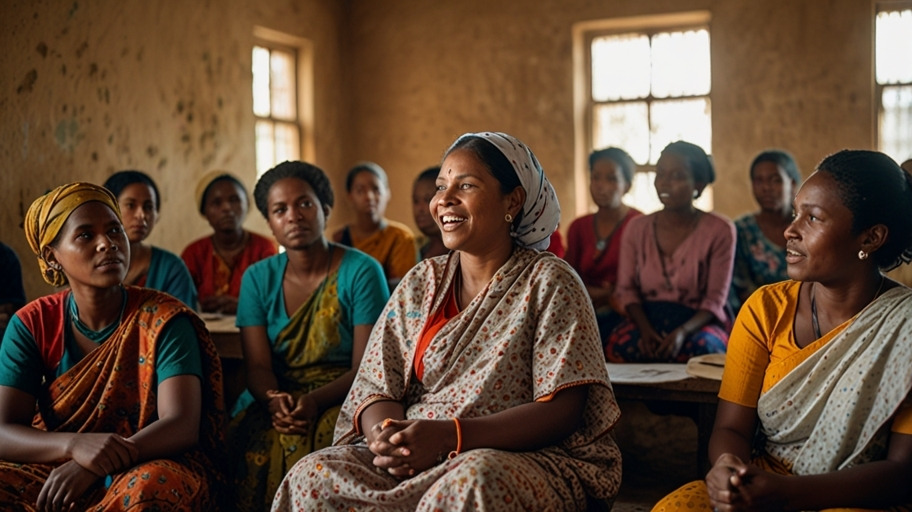
These cultural norms limit women's participation in the workforce, politics, and public life, and contribute to issues such as early marriage, domestic violence, and unequal access to education and healthcare. Efforts to change these norms through education, media, and advocacy campaigns have had some success, but progress remains slow, particularly in rural areas.
Conclusion
Cambodia has made notable progress in promoting gender equality over the past few decades, particularly in areas such as education, healthcare, and women's participation in the workforce. However, significant challenges remain, particularly in terms of gender-based violence, political representation, and cultural norms that perpetuate gender inequality.
Achieving true gender equality in Cambodia will require sustained efforts from the government, civil society, and international organizations, as well as a shift in societal attitudes toward gender roles. Comprehensive legal reforms, effective enforcement of gender equality laws, and greater investment in education and economic opportunities for women are crucial for that the progress made in gender equality is not only maintained but accelerated. By addressing these challenges, ensuring Cambodia can continue to move toward a more just and equitable society for all its citizens.